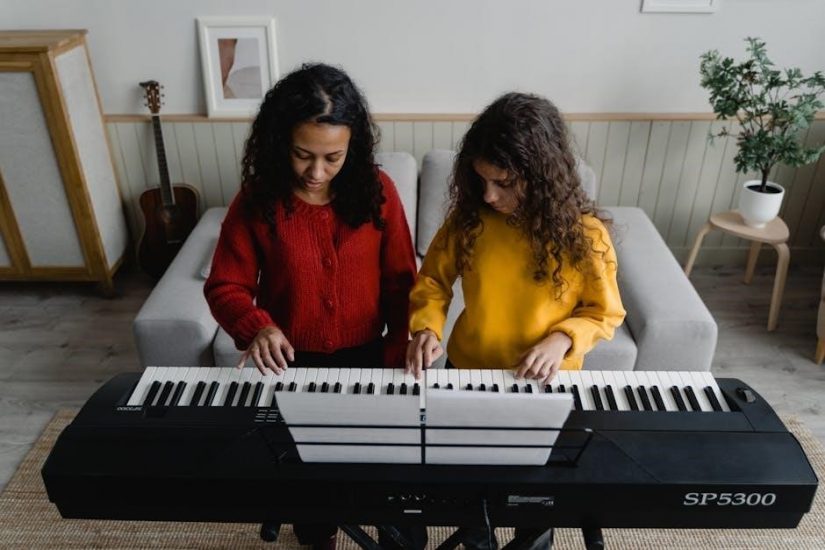
Piano sight-reading exercises, often available as PDFs, are crucial for musicians. Resources like “354 Sight Reading Exercises” offer practice material, enhancing skills quickly and efficiently.
What is Sight Reading?
Sight-reading, in the context of piano exercises, is the ability to perform a piece of music accurately, at first glance, without prior practice. It demands immediate decoding of musical notation – notes, rhythms, dynamics, and articulation – translating them into sound.
Effective sight-reading isn’t about playing perfectly; it’s about maintaining a steady tempo and minimizing errors while grasping the musical intent. PDF exercises, such as those found in collections like “354 Sight Reading Exercises”, provide structured practice. These resources help build fluency and confidence, essential for any pianist, fostering a deeper connection with music.
Why Use PDF Exercises?
PDF exercises for piano sight-reading offer unparalleled convenience and accessibility. They are readily downloadable, printable, and easily stored, eliminating the need for bulky physical books. Resources like online collections and “354 Sight Reading Exercises” (available in PDF format) provide a vast library of material.
PDFs allow for personalized practice; you can select exercises tailored to your skill level. Furthermore, many PDFs are compatible with annotation tools, enabling you to mark difficult passages or analyze harmonic structures. This focused approach accelerates improvement and makes consistent practice more effective.
Fundamentals of Sight Reading
Sight-reading requires understanding the staff, clefs, note values, and key signatures. Mastering these basics, alongside interval and chord recognition, is essential for progress.
Understanding the Staff and Clefs
The musical staff, comprised of five lines and four spaces, forms the foundation of written music. Piano sight-reading exercises, often in PDF format, heavily rely on quick staff recognition. Understanding the treble and bass clefs is paramount; the treble clef generally represents higher pitches for the right hand, while the bass clef indicates lower pitches for the left.
Each line and space corresponds to a specific note. Familiarity with these note placements, and how they change with ledger lines, is vital. Consistent practice with sight-reading PDFs builds this crucial visual connection, enabling faster note identification and ultimately, smoother, more confident playing.
Note Recognition and Values
Note recognition is central to effective piano sight-reading, and PDF exercises provide focused practice. Beyond simply identifying notes on the staff, understanding their rhythmic values – whole, half, quarter, eighth, and sixteenth notes – is equally important. These values dictate how long each note is held.
Sight-reading PDFs often present a mix of note durations, challenging you to accurately interpret and perform the rhythm. Mastering this connection between visual notation and aural duration is key. Regular practice with varied exercises builds fluency, allowing for more accurate and expressive musical interpretation.
Key Signatures and Scales
Key signatures, represented by sharps or flats at the beginning of a staff, indicate the tonal center of a piece. Piano sight-reading PDFs frequently incorporate exercises in various keys, demanding quick recognition of these signatures. Understanding the corresponding scales – major and minor – is crucial for interpreting the music accurately.
Exercises often focus on navigating scales within different key signatures, reinforcing both note recognition and finger patterns. Proficiency in scales allows for smoother transitions and a deeper understanding of harmonic relationships. Consistent practice with PDF resources builds confidence and speed in deciphering unfamiliar keys.

Resources for Piano Sight Reading PDFs
Numerous piano sight-reading PDF resources exist, including “354 Sight Reading Exercises” and free online options, offering varied practice materials for all levels.
“354 Sight Reading Exercises”, Overview
“354 Sight Reading Exercises” is a widely recognized resource for pianists seeking to improve their sight-reading proficiency. Available in PDF format, as well as hardcopy and coil-bound editions, it provides a substantial collection of original musical examples. The exercises are structured to progressively challenge players, building skills incrementally.
The collection is particularly valued for its focus on practical application, presenting material designed to be immediately useful in real-world musical scenarios. Pricing varies, with the PDF version being the most affordable option at $6.99, while hardcopy and coil-bound versions are priced at $11.99 and $6.99 respectively. This resource is a staple for many piano teachers and students alike.
Free PDF Exercise Sources Online
Numerous websites offer free piano sight-reading exercises in PDF format, providing accessible practice material for musicians of all levels. Websites host collections like “sight reading music exercises 1 — 20” by vargasflavio, available for download and printing in both PDF and MIDI formats.
These resources often include a variety of exercises focusing on different aspects of sight-reading, such as note recognition and rhythmic accuracy. While the quality and organization may vary, they represent a valuable starting point for those seeking affordable or complimentary practice materials. Exploring these online sources can significantly supplement a regular practice routine.
Paid PDF Collections ౼ Value Assessment
Considering paid piano sight-reading PDF collections, such as the “354 Sight Reading Exercises” options (ranging from $6.99 for a standard PDF to $11.99 for coil binding), requires assessing their value. These collections often provide a more structured and comprehensive approach compared to free resources.
Factors to consider include the quantity and quality of exercises, the organization of material by difficulty level, and the inclusion of progressive learning concepts. While free options are plentiful, a curated, professionally compiled collection can save time and offer a more focused learning experience, potentially accelerating skill development.
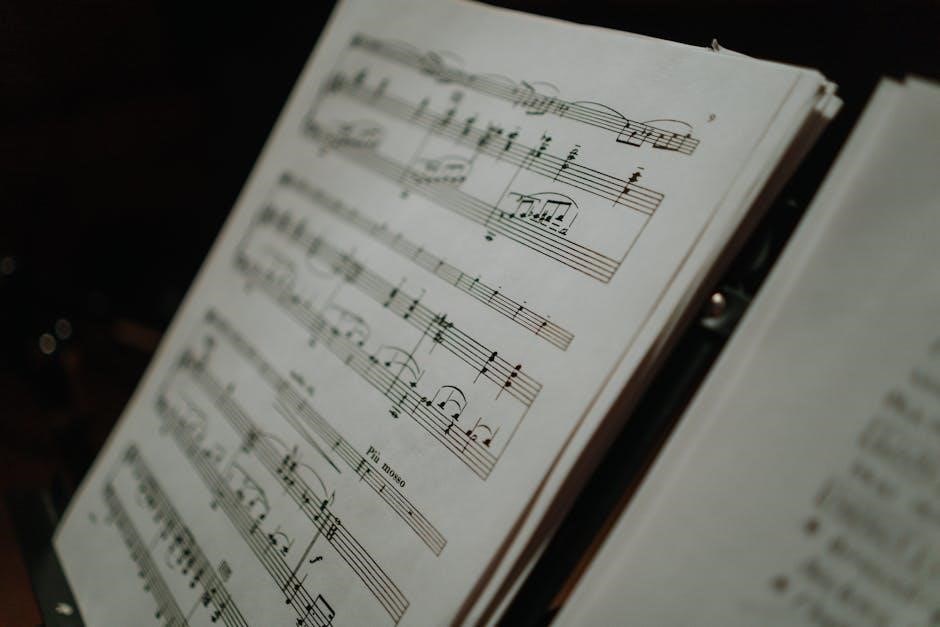
Types of Sight Reading Exercises
Piano sight-reading exercises encompass melodic, rhythmic, and harmonic practice. PDFs often isolate these elements, building skills progressively for comprehensive musical understanding and fluency;
Melodic Sight Reading
Melodic sight-reading exercises, frequently found in PDF format, focus on recognizing intervals and navigating stepwise or leaping melodic lines. These PDFs typically present single-line melodies, demanding accurate note identification and rhythmic execution.
Beginner exercises often utilize limited ranges and simple rhythms, gradually increasing complexity. Intermediate and advanced PDFs introduce wider ranges, accidentals, and more intricate melodic patterns.
Effective practice involves scanning the entire melody before playing, identifying key signatures, and anticipating intervals. Resources like “354 Sight Reading Exercises” provide a wealth of melodic material, fostering fluency and musicality. Consistent practice with these PDFs builds confidence and improves overall musicianship.
Rhythmic Sight Reading
Rhythmic sight-reading exercises, commonly available as PDFs, isolate and develop the ability to accurately interpret and perform rhythmic patterns. These PDFs often present rhythms without pitch, forcing focused attention on note values, rests, and time signatures.
Beginner PDFs start with simple rhythms like quarter notes, half notes, and whole notes, progressing to include eighth notes, sixteenth notes, and dotted rhythms. Intermediate and advanced exercises introduce syncopation, tuplets, and complex time signatures.
Practicing with a metronome is crucial. Resources like online collections and “354 Sight Reading Exercises” offer diverse rhythmic challenges, enhancing rhythmic precision and internal pulse.
Harmonic Sight Reading
Harmonic sight-reading exercises, frequently found as PDF downloads, challenge musicians to interpret chords, progressions, and voice leading on the spot. These PDFs move beyond single melodies, demanding an understanding of harmony and its function within a musical context.
Exercises often begin with simple triads and seventh chords, progressing to more complex harmonies like inversions, secondary dominants, and altered chords. Analyzing chord symbols and recognizing common progressions are key skills developed through these PDF resources.
Resources like curated collections and “354 Sight Reading Exercises” provide varied harmonic challenges, improving harmonic fluency and improvisational skills.

Exercises for Different Skill Levels
Piano sight-reading PDF exercises cater to all levels – beginner, intermediate, and advanced – offering progressively challenging material for consistent skill development.
Beginner Level Exercises
Beginner piano sight-reading PDF exercises typically focus on fundamental elements. These include simple rhythms, notes within the staff, and basic key signatures – often C major or G major. Exercises prioritize recognizing notes quickly and accurately, without complex chords or rapid passages.
Many free PDF resources offer exercises with limited note ranges and straightforward melodic lines; The goal is to build confidence and establish a solid foundation in note reading and rhythm. “354 Sight Reading Exercises” includes introductory material suitable for new learners, gradually increasing in difficulty. Consistent practice with these exercises is key to developing sight-reading fluency.
Intermediate Level Exercises
Intermediate piano sight-reading PDF exercises expand upon foundational skills, introducing more complex rhythms, key signatures, and hand coordination. Expect to encounter dotted rhythms, syncopation, and a wider range of notes across both clefs. These exercises often incorporate simple chord progressions and more varied melodic contours.
PDF collections like “354 Sight Reading Exercises” provide a substantial volume of material at this level. Online sources offer exercises focusing on specific skills, such as interval recognition or scale practice. The aim is to improve speed and accuracy while navigating increasingly challenging musical textures, preparing for more advanced repertoire.
Advanced Level Exercises
Advanced piano sight-reading PDF exercises demand a high level of proficiency, featuring complex rhythms, intricate harmonies, and rapid key changes. Expect polyrhythms, irregular time signatures, and extensive use of accidentals. These PDFs often present excerpts from actual piano literature, demanding immediate musical interpretation alongside technical accuracy.
Resources may include transposed passages or exercises designed to test harmonic understanding. While “354 Sight Reading Exercises” may offer some challenge, advanced players often seek out specialized collections or generate exercises on-demand using software. The goal is fluent reading and confident performance of unfamiliar, sophisticated musical material.

Specific Exercise Techniques
Piano sight-reading PDFs benefit from focused techniques: interval, chord, and pattern recognition. These drills, found in resources like exercise generators, build fluency.
Interval Recognition Exercises
Interval recognition exercises, frequently found within piano sight-reading PDF collections, are foundational for quickly deciphering musical notation. These exercises typically present short melodic fragments, challenging the pianist to identify the distance between two notes – whether it’s a second, third, fourth, or larger interval.
Effective practice involves isolating intervals, both visually on the staff and aurally by playing them. Many PDF resources, including those offering on-demand exercise generation, allow customization to focus on specific intervals. Consistent practice strengthens the connection between visual representation and aural perception, leading to faster and more accurate sight-reading. Recognizing intervals instantly streamlines the decoding process, allowing for a more musical performance.
Chord Recognition Exercises
Chord recognition exercises, commonly included in piano sight-reading PDF materials, build proficiency in identifying harmonic structures at a glance. These exercises present chords in various inversions and voicings, requiring the pianist to quickly determine whether it’s a major, minor, diminished, or augmented chord.
PDF resources often categorize exercises by chord type, allowing focused practice. Start with triads, then progress to seventh chords and more complex harmonies. Combining visual recognition with aural identification – playing the chord and naming it – is crucial. Mastering chord recognition accelerates sight-reading by reducing the cognitive load, enabling a smoother and more expressive performance.
Pattern Recognition Exercises
Pattern recognition exercises, frequently found within piano sight-reading PDF collections, develop the ability to anticipate musical sequences. These exercises present recurring melodic or rhythmic motifs, training the eye to quickly identify familiar shapes on the page.
PDFs often structure these exercises progressively, starting with simple patterns and gradually introducing complexity. Recognizing patterns reduces the need to analyze each note individually, improving reading speed and accuracy. Focus on identifying scale fragments, arpeggios, and common chord progressions. This skill is invaluable for navigating unfamiliar scores and enhancing overall musical fluency.

Utilizing Sight Reading PDFs Effectively
Piano sight-reading PDFs are most effective with consistent practice and realistic goals. Analyze mistakes to improve, and integrate these exercises into your daily routine.
Setting Realistic Goals
When utilizing piano sight-reading PDFs, establishing achievable goals is paramount for sustained progress. Begin with exercises aligned to your current skill level, avoiding overwhelming complexity.
Focus on incremental improvements – perhaps mastering a specific rhythmic pattern or key signature each week. Don’t aim for perfection initially; prioritize consistent, accurate reading over speed.
Break down larger exercises into smaller, manageable sections. Celebrate small victories to maintain motivation. Remember, the goal isn’t flawless performance on the first attempt, but steady, demonstrable growth in your sight-reading ability.
Regular self-assessment, coupled with realistic expectations, will unlock your potential.
Consistent Practice Schedule
Integrating piano sight-reading PDFs into a regular practice routine is key to improvement. Short, frequent sessions – even 15-20 minutes daily – are more effective than infrequent, lengthy ones.
Treat sight-reading as a fundamental skill, like scales or chords, and dedicate specific time for it. Consistency builds neural pathways, enhancing your ability to process musical notation quickly.
Schedule practice at a time when you’re alert and focused. Utilize a variety of PDF exercises to maintain engagement and challenge yourself.
A predictable schedule fosters discipline and accelerates your sight-reading proficiency.

Analyzing Mistakes and Improving
When using piano sight-reading PDFs, don’t just play through errors – actively analyze them. Identify recurring patterns: are you struggling with specific rhythms, intervals, or key signatures?
Slow down the tempo and isolate challenging sections. Practice those measures repeatedly until accuracy improves. Consider using a metronome to reinforce rhythmic precision.
Review the music after playing, noting where you hesitated or made incorrect choices.
Understanding why you made a mistake is crucial for preventing it in the future. Targeted practice, informed by self-assessment, yields the most significant gains.

Software and Tools for Generating Exercises
On-demand exercise generators create endless piano sight-reading material, surpassing static PDFs. PDF editing tools allow annotation and personalized practice routines.
On-Demand Exercise Generators
On-demand exercise generators represent a significant advancement over traditional piano sight-reading PDFs. These innovative tools dynamically create new exercises instantly, eliminating the limitations of fixed content; This ensures a perpetually fresh and challenging practice experience, preventing memorization and fostering genuine sight-reading ability.
Unlike static PDF collections, these generators adapt to your skill level, offering customized exercises in various keys, time signatures, and rhythmic complexities. They support multiple instruments, including piano, guitar, and voice, making them versatile resources. The ability to generate exercises “every time you practice” guarantees a constant supply of new material, crucial for consistent improvement.
These tools are particularly beneficial for long-term practice, as they prevent stagnation and encourage continuous learning. They effectively address the issue of running out of suitable sight-reading material, a common frustration for dedicated musicians.
PDF Editing and Annotation Tools
While piano sight-reading PDFs offer convenience, PDF editing and annotation tools enhance their utility significantly. These tools allow musicians to actively engage with the exercises, marking difficult passages, adding fingerings, or noting rhythmic challenges directly onto the PDF itself.
Features like highlighting, underlining, and adding text comments facilitate focused practice and personalized learning. Annotations serve as valuable reminders during subsequent practice sessions, reinforcing areas needing improvement. Some tools even enable audio recording, allowing self-assessment and performance tracking.
Effectively utilizing these tools transforms static PDFs into dynamic learning resources. They bridge the gap between passive reading and active musical engagement, maximizing the benefits of sight-reading practice and fostering a deeper understanding of the music.

Integrating Sight Reading into Your Practice Routine
Piano sight-reading, using PDF exercises, should be a daily warm-up or cool-down. Combine it with repertoire learning for holistic musical growth.
Warm-up Exercises
Piano sight-reading warm-ups, utilizing readily available PDF exercises, are essential for preparing your mind and fingers. Begin with simple, diatonic melodies focusing on key signatures and note recognition. Gradually increase complexity, introducing rhythmic variations and accidentals.
Resources like “354 Sight Reading Exercises” provide a structured progression. Short, focused sessions – even five to ten minutes – are more effective than lengthy, unfocused practice. Prioritize accuracy over speed initially, building a solid foundation. Consistent warm-ups enhance fluency and confidence before tackling more challenging pieces.
Cool-down Exercises
Piano sight-reading cool-down exercises, often found in PDF format, are vital for consolidating learning and preventing fatigue. After intense practice, select simpler exercises than those previously tackled. Focus on maintaining accuracy and a relaxed technique.
Utilize materials from resources like “354 Sight Reading Exercises” to reinforce concepts. These exercises should be less demanding, allowing for mindful reflection on any challenges encountered during the session. A gentle cool-down aids muscle recovery and reinforces neural pathways, improving long-term retention and preventing strain.
Combining with Repertoire Learning
Integrating piano sight-reading exercises, readily available as PDFs, with repertoire learning significantly accelerates musical growth. Before tackling a new piece, sight-read simplified excerpts or harmonizations. This builds familiarity with the key, rhythms, and melodic contours.
Resources like “354 Sight Reading Exercises” provide adaptable material. After learning a section of repertoire, sight-read a similar exercise to reinforce patterns. This dual approach enhances both technical proficiency and musical understanding, fostering a deeper connection with the music and improving overall performance.